
Need Help?
Do I Have a Drinking Problem? The Subtle Signs You Might Be Missing
Spiro Apostolopoulos

We hope you enjoy reading this blog post.
Whether you want to break a bad habit, overcome mental illness, or simply take your life in a new direction, our experienced hypnotists will help you make these changes from within.
You drink alcohol after work. A glass of wine to unwind. Maybe two.
On Friday, you have a few drinks with friends. Saturday, there's wine with dinner. Sunday afternoon, there's a beer while watching sport.
None of this feels like a problem. You're not drinking in the morning. You're not missing work. You don't get blackout drunk.
But lately, something feels off. You feel anxious when there's no alcohol in the house. You drink more than you planned. You need that glass of wine to switch off at night.
These aren't signs of "rock bottom." But they might be signs of something that needs attention.
The Spectrum of Drinking: It's Not All or Nothing
Most people think drinking problems come in two categories: casual social drinking or full-blown alcoholism. The reality? There's a huge grey area in between.
Social drinking
You drink occasionally in social settings. You can easily have one or two drinks and stop. Alcohol isn't part of your daily routine.
Grey area drinking
You're drinking too much alcohol regularly, sometimes more than intended. This sits between social drinking and alcohol abuse.
Alcohol dependence
You struggle to function without alcohol. This level of heavy drinking is considered substance abuse and causes serious problems in your work, relationships, or health.
Many people live in the grey area for years without realising it. They're functioning and successful, but alcohol has become more central to their life than they'd like to admit.
How Do I Know If I've Got a Drink Problem?
If you're asking the question, it's worth paying attention. You don't need to fit a clinical definition to benefit from drinking less.
Ask yourself:
- Do you consume alcohol more than you intend to? Do you plan to have one or two but end up having more?
- Do you feel anxious when alcohol isn't available? Does the thought of limiting your alcohol intake make you uncomfortable?
- Do you need to drink alcohol to relax, sleep, or cope with stress?
- Have you tried to cut back and struggled?
- Do you regret things you've said or done while drinking?
- Is drinking affecting your relationships, work, or health?
If you answered yes to several of these, you might be in that grey area.
Alcohol use disorder (AUD) is a medical condition characterised by an impaired ability to stop or control alcohol use despite adverse consequences. Healthcare professionals use criteria from the Diagnostic and Statistical Manual to diagnose alcohol dependence. The severity can be classified as mild, moderate, or severe based on the number of symptoms present.
Being alcohol dependent doesn't mean you've failed. It means your brain has adapted to regular alcohol use and needs professional support to change. When drinking starts interfering with your daily life: work, relationships, responsibilities — you're at greater risk for developing more serious problems.
Online self-assessment tools like the AUDIT questionnaire can help you evaluate where you stand. For confidential advice, you can also contact the National Alcohol & Other Drug Hotline at 1800 250 015 (available 24/7).
Which of the Following Are Early Signs of Alcoholism?
Early signs are often subtle. They creep in slowly, becoming normal before you realise it. Recognising the signs of alcohol dependence early can make recovery much easier. You don't need to be fully dependent on alcohol to benefit from making changes. Common symptoms of alcohol use disorder include:
- Drinking more or longer than intended – You spend more time drinking than planned and lose control over how much you consume. A hallmark sign of AUD.
- A strong urge to drink – Cravings that are difficult to resist
- Increased tolerance to alcohol – You need more drinks to feel the same effect
- Drinking has become routine - Wine with dinner every night. Beer after work without fail. It's automatic now.
- You're building tolerance - You need more drinks to feel the same effect.
- You drink alone regularly - Not just occasionally, but as a routine part of your evening.
- You're defensive about your drinking - When someone mentions it, you immediately justify or deflect. "Everyone drinks this much."
- You're drinking to manage emotions - Bad day? Drink. Stressed? Drink. Anxious? Drink. Alcohol has become your emotional regulation tool.
- You're hiding your drinking - You downplay how much you drink. You pour drinks when no one's looking. You buy alcohol from different shops.
- You're experiencing "hangxiety." - The day after drinking, you feel waves of anxiety, guilt, or shame.
- You're neglecting other activities - Things you used to enjoy don't interest you anymore.
- You're having blackouts - You can't remember parts of conversations or events from the night before.
These signs don't mean you're an "alcoholic" in the stereotypical sense. But they do suggest your relationship with alcohol has shifted.
The Grey Area: When It's Not Rock Bottom, But It's Not Healthy
Grey area drinking is where most people with alcohol concerns actually live.
You're not stealing to fund your drinking. You haven't lost your job or family. But you're also not fully in control.
You drink more nights than you don't. You can't imagine social events without alcohol. You rely on drinks to manage stress. You've tried to cut back but keep drifting back.
This is the trickiest place to be. It's easy to minimise the problem because the consequences aren't dramatic. Yet.
The danger isn't that it stays grey. It's that it can slowly darken into dangerous area. Tolerance builds. Alcohol has much less effect than it used to, so you drink more. Emotional reliance deepens.
The good news? This is also the easiest time to make changes. You haven't crossed into severe dependence. Your brain and body can recover quickly.
What Causes Alcohol Problems?
Understanding why some people develop alcohol use disorder while others don't can help reduce shame and self-blame.
Genetics play a significant role
If a family member struggles with alcoholism, you're at higher risk. This doesn't mean you're destined to develop a problem, but it does mean you might need to be more mindful, especially if you started drinking at an early age, which further increases risk.
Stress and trauma are major contributing factors
Many people turn to alcohol to cope with difficult experiences or ongoing stress. What starts as occasional stress relief can become dependence.
The age you started drinking matters
Starting to drink at a young age increases the risk of developing alcohol addiction later in life. Understanding your risk factors for alcohol addiction can help you make informed choices about treatment.
Brain changes from too much alcohol use
Long-term drinking changes your brain chemistry, leading to physical dependence and alcohol withdrawal symptoms. These symptoms can range from mild anxiety and shaking to severe complications. This is why quitting becomes harder over time, even when you genuinely want to stop.
How Alcohol Masks Deeper Issues
For many people, drinking isn't really about alcohol. It's about what alcohol does for them.
- It numbs anxiety - That tight feeling in your chest melts away after the first drink.
- It helps you sleep - Or so you think. Alcohol might help you fall asleep faster, but it destroys sleep quality and actually causes difficulty sleeping throughout the night. Many people with trouble sleeping turn to alcohol, not realising it makes the problem worse. You wake up feeling worse, creating more anxiety.
- It covers up trauma - Past experiences you haven't dealt with feel less raw when you're buzzed. But they're still there in the morning.
- It fills emotional voids - Loneliness, boredom, grief, stress — alcohol temporarily makes these feelings bearable. Many people who feel depressed turn to drinking for relief, but alcohol is actually a depressant that worsens depression and mood over time.
- It gives you permission to be yourself - You're funnier, more confident after a few drinks. But this suggests you're not comfortable being yourself sober.
The problem with using alcohol this way is that it never solves the underlying issue. And over time, it often makes those issues worse.
What Is Living with an Alcoholic Like?
If you live with someone who drinks problematically, you already know the answer. Watching a person you care about — one of your loved ones — struggle with alcohol is heartbreaking.
- It's unpredictable. You never know which version of them you'll get. Will they be fun or aggressive? Loving or distant?
- It's exhausting. You're constantly managing their mood, covering for them, or cleaning up consequences. You walk on eggshells.
- It's lonely. Even when they're physically present, they're not really there.
- It's confusing. They promise to change. Sometimes they do, briefly. Then they slip back.
- It's painful. You watch someone you care about harm themselves slowly, and you feel powerless.
Living with someone who has a drinking problem affects your mental health and relationships. It's not your responsibility to fix their drinking, but it is important to take care of yourself.
Consider setting boundaries, seeking support through groups like Al-Anon, talking to a therapist, and recognising that you can't control their choices, only your responses.
Why Traditional Advice Often Doesn't Work
"Just stop drinking." "Have more willpower." "Replace it with something else."
If it were that simple, you would have done it already.
Drinking habits are often driven by subconscious patterns. Your conscious mind wants to cut back. Your subconscious has learned that alcohol equals relief, comfort, or reward.
This is why people can genuinely intend to drink less, but find themselves pouring a drink anyway. It's not weakness. It's how habits work in the brain.
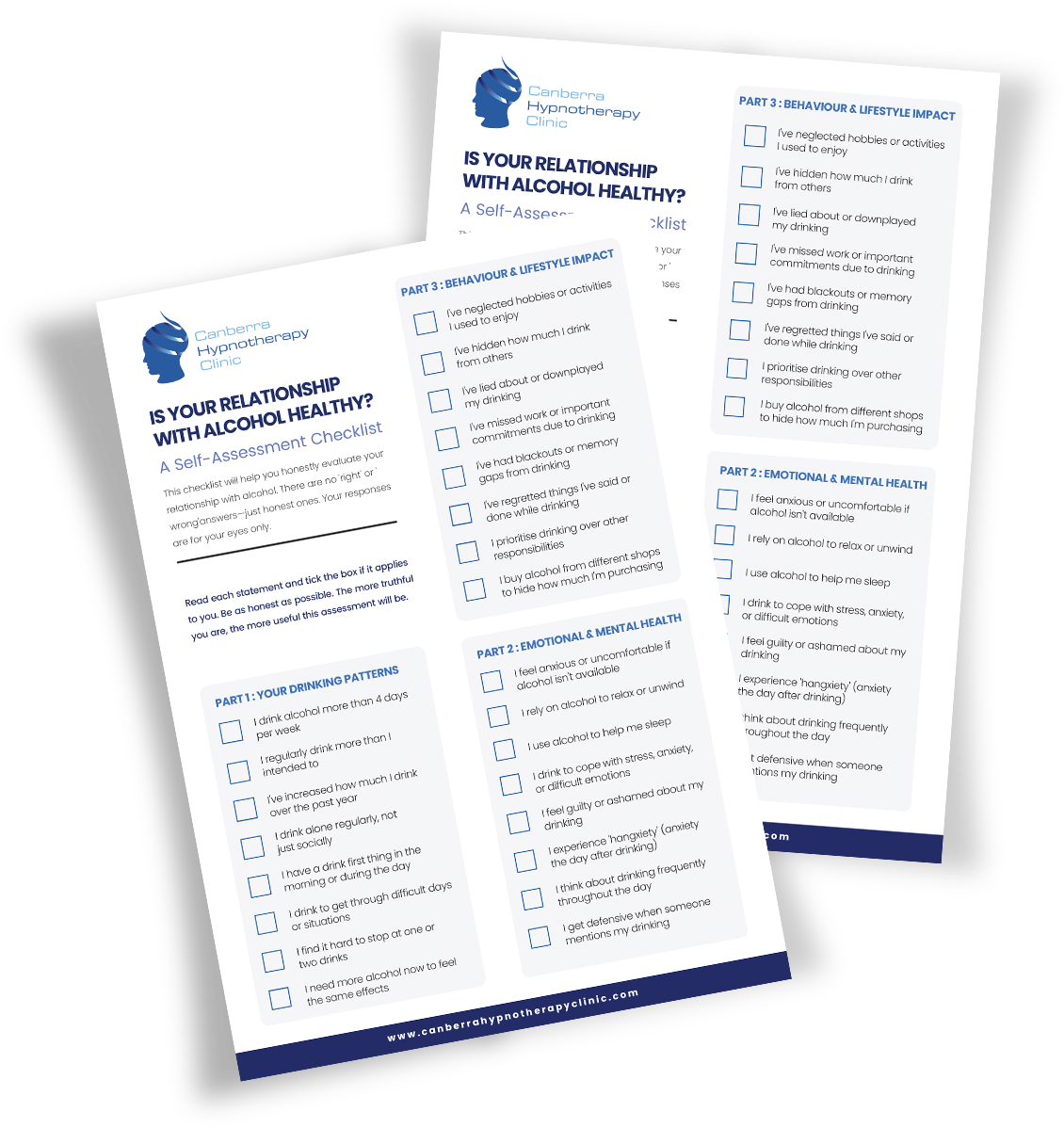
Download the Free Checklist: Is Your Relationship with Alcohol Healthy?
If some of these questions made you pause, this checklist can help you look a little closer, without labels or judgement.
It walks you through subtle signs of grey area drinking, emotional triggers, and patterns that are easy to miss when alcohol has become part of everyday life.
How Hypnotherapy Can Help with Alcohol Addiction
Hypnotherapy works differently because it addresses drinking at the subconscious level.
Breaking automatic patterns
Your brain has created neural pathways linking triggers (stress, end of workday) to drinking. Hypnotherapy for alcohol addiction helps rewire these patterns.
Building new coping strategies
Instead of reaching for a drink when stressed, hypnotherapy helps you develop healthier mechanisms that become your new automatic response.
Addressing root causes
If you're drinking to manage anxiety, trauma, or stress, hypnotherapy can help process these underlying issues. When you deal with what's driving the drinking, the urge often naturally diminishes.
Supporting your goals
Whether you want to quit completely or establish healthier drinking patterns, hypnotherapy can support either goal.
Working at a deeper level
Talk therapy works with your conscious mind. Hypnotherapy accesses your subconscious — where habits, emotions, and automatic behaviours live.
Other Treatment Options for Alcohol Addiction
Hypnotherapy works well on its own or alongside other evidence-based treatments:
Behavioural treatments
These aim to change drinking behaviour through counselling and mindfulness-based therapies. They help you develop skills to manage triggers and build healthier coping mechanisms.
Medications
Options like naltrexone, acamprosate, and disulfiram are approved to help reduce alcohol dependence. Your GP can discuss whether medication might support your recovery.
Mutual-support groups
Self-help groups like Alcoholics Anonymous provide peer support for stopping or reducing drinking and are available in most communities. Many people find the shared experience invaluable, especially when combined with professional help from a therapist or counsellor.
Counselling & group therapy
Professional guidance combined with peer support can address both the practical and emotional aspects of changing your drinking.
The best approach often combines several of these options. What matters most is finding what works for you.
What Change Actually Looks Like
Changing your relationship with alcohol doesn't happen overnight. But it also doesn't have to be as hard as you think.
In the first week, you might feel uncomfortable. That automatic reach for a drink will still be there.
After two weeks, you'll start noticing benefits. Better sleep. More energy. Clearer thinking. Less anxiety.
After a month, new patterns start to feel more natural. You've proven to yourself that you can do this.
After three months, you often experience a significant shift. You feel more like yourself. Your relationships improve. You have time and energy for things you'd neglected.
The key is taking it one decision at a time. You're not committing to "never drinking again forever." You're just choosing not to drink right now. Then making that choice again.
Taking the First Step
If you recognise yourself in this article, you're already ahead. Awareness is the first step toward change. Think about the past year: has your drinking been causing trouble that wasn't there before?
You don't need to have all the answers right now. You just need to be honest about where you are and open to the possibility of change.
Consider:
- Track your drinking for a week - Write down every drink and note how much alcohol you're actually consuming. This honest look at your alcohol consumption often surprises people when they see the actual numbers.
- Take a break - Try to stop drinking for a week. Notice what feelings come up.
- Talk to someone - Whether it's your GP, a therapist, or a trusted friend, saying it out loud reduces the shame.
- Explore hypnotherapy - If traditional approaches haven't worked, hypnotherapy might be the missing piece.
- Be kind to yourself - You're not broken. You're not weak. You're human.
Important Safety Information for Alcohol Use Disorder
If you've been drinking heavily for an extended period, be aware that alcohol withdrawal can be potentially life-threatening and may require medical supervision. Don't attempt to quit "cold turkey" without medical guidance if you:
- Drink heavily every day or regularly binge drink (consuming large amounts in short periods)
- Experience hand tremors, shaking, sweating, or a racing heart when you haven't had a drink
- Have tried to stop before and experienced severe withdrawal symptoms
Long-term alcohol misuse can lead to serious health problems including permanent brain damage, liver disease, heart failure, a weakened immune system, mental disorders, and other chronic health conditions. Continued heavy drinking creates an increased risk for these conditions developing or worsening over time.
It can also cause serious social problems, including unemployment and relationship difficulties. The short-term risks include reckless behaviour and increased likelihood of accidents.
This is why getting professional support is so important. If your drinking is causing problems in any area of your life, seek professional help sooner rather than later. Your GP can assess your situation and recommend the safest approach for you.
You Don't Have to Do This Alone
Changing your relationship with alcohol is challenging. But it's also one of the most rewarding things you can do for yourself.
You deserve to feel in control. You deserve to sleep well, wake up clear-headed, and not spend your mornings regretting last night. You deserve relationships where you're fully present.
The question isn't whether you can change. It's whether you're ready to start.
Change Your Relationship with Alcohol
You've read this far. That means something.
Changing your drinking doesn't have to mean white-knuckling through cravings or relying on willpower alone. Hypnotherapy works differently. It addresses the subconscious patterns that keep you reaching for a drink automatically.
How Hypnotherapy Helps
We work at the level where habits actually live: your subconscious mind. This is where "just one drink" becomes automatic. Where alcohol = stress relief gets programmed.
When you change things at this level, you're not fighting yourself anymore. The urge to drink naturally diminishes. You develop new, healthier responses that feel automatic too.
Many clients tell us they've tried to cut back before. Sometimes multiple times. The difference? We address why you drink, not just what you drink.
Take the Next Step
We offer a free consultation to discuss your situation, your goals, and whether hypnotherapy is right for you. No pressure. No judgment.
We help clients in Canberra, Sydney, and beyond take their next steps towards healthier, more balanced living.
Schedule your consultation today to get started.
Remember: This blog is for educational purposes only and doesn't replace professional medical advice. If you're experiencing severe alcohol dependence or withdrawal symptoms, please seek immediate medical help.
Your journey to inner peace begins here!
Contact us now to schedule your consultation and take the first step towards a calmer, more empowered you.